October 12, 2026
The Half-Bag Problem: How to Plan a Week of Meals Without Wasting Groceries
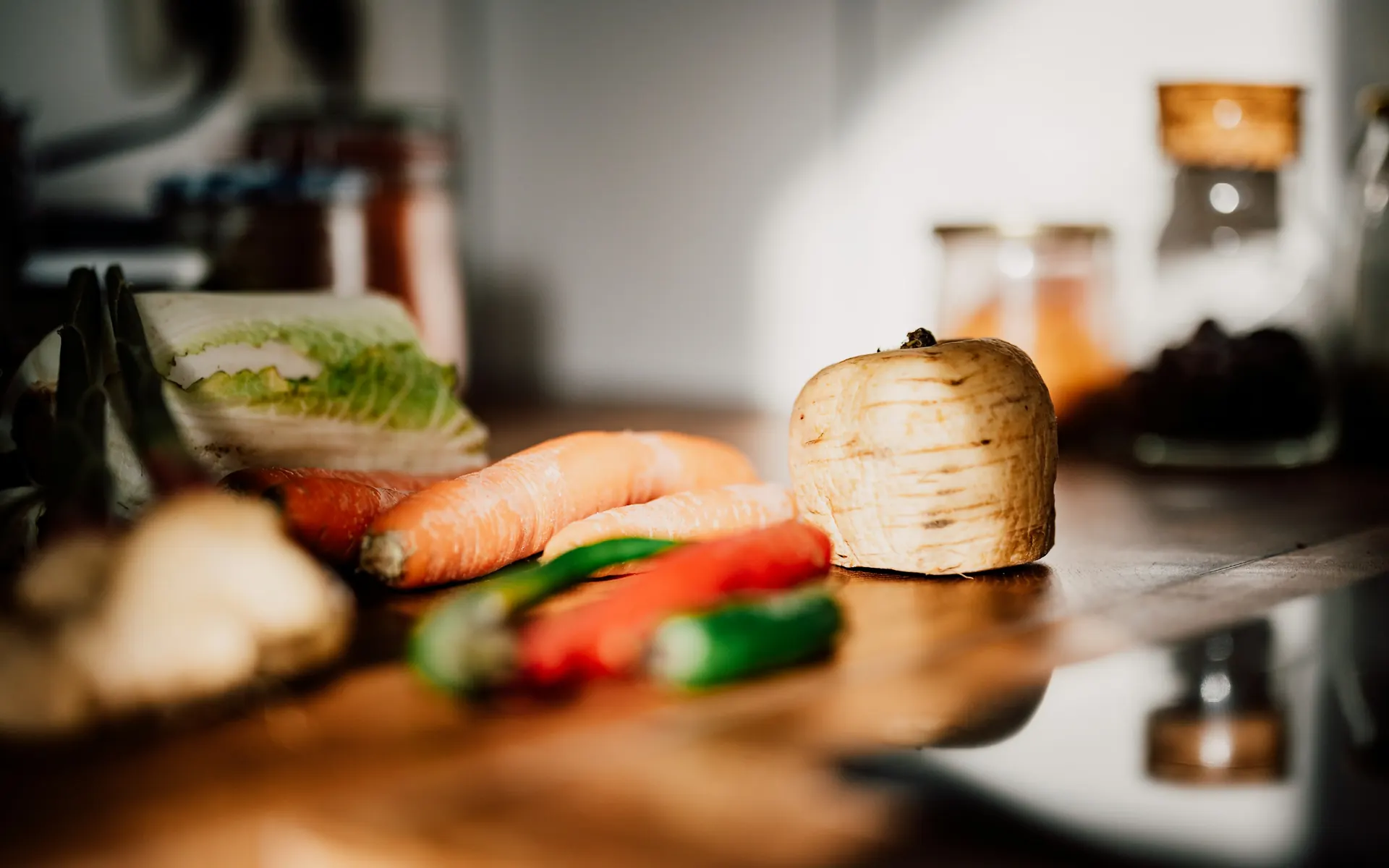
It’s Thursday, a little after six. You open the fridge to start dinner and find half a head of cabbage left from Tuesday’s slaw, most of a bunch of cilantro wilting in its bag, a broccoli crown going yellow at the edges, and a carton of cream with a quarter cup gone.
There’s plenty of food in there. There isn’t a dinner.
None of it was a bad buy. Each thing was bought for a recipe, and each recipe used exactly what it asked for. What’s left is the part that no other dinner that week was chosen to use.
Every fresh ingredient needs a second dinner.
You don’t fix the half bag by buying less, or by buying smaller. You fix it before you shop, by choosing the week’s dinners so that whatever spoils has more than one of them to go into.
The problem isn’t the groceries. It’s the recipes they were bought for.
Recipes are written in tablespoons and cups. Stores sell heads, bunches and cartons. A slaw wants a third of a cabbage, and the store sells you the whole head. A soup wants two stalks of celery, and the celery comes as a bunch.
Each recipe on its own is fine. The trouble starts when a week is five appealing recipes chosen one at a time, each bringing its own fresh ingredients and using part of each. That isn’t a meal plan. It’s five shopping lists stapled together, and the parts nobody used are what you find on Thursday.
Those parts add up. The EPA estimates that the average American wastes $728 worth of food a year, at home and eating out. For a household of four that’s $2,913, about $56 a week and roughly 11% of everything it spends on food. Fresh fruit and vegetables are about a fifth of it by weight.
Start with ingredients, not recipes
The school-night formula makes the case for buying ingredients that repeat. This is how to set up a whole week that way: choose the ingredients first, then the dinners that use them.
Start with three or four fresh anchors. These are the things sold in more than one dinner’s worth, like a head of cabbage, a bunch of herbs or a family pack of chicken, because those are what end up as half bags. Pick ones that work more than one way. Cabbage is a crunchy raw slaw on Tuesday, a quick stir-fry on Wednesday and a soft vegetable in soup on Thursday: three dinners that don’t taste like the same one.
Not everything has to repeat. Tortillas freeze, dried noodles keep for months, and a sealed block of tofu lasts until the date on the pack. Buying something for one dinner is fine when it keeps. It’s the things that spoil that need a second dinner.
Then put the dinners in order of what spoils first. According to the University of Florida’s extension service, broccoli and green onions keep three to five days in the fridge, cabbage one to two weeks, and carrots two to three. So broccoli and soft herbs go early in the week, and cabbage and carrots carry the end of it. Most plans do the opposite, saving the fresh dinner for Friday as a treat, and by Friday it isn’t fresh any more.
Protein follows the same rule. The USDA gives raw chicken one to two days in the fridge and cooked chicken three to four, which is why the week below cooks all of it on Monday.
One basket, five nights
Here’s a week for a household of four, shopped at the weekend. It’s built on four anchors (chicken thighs, broccoli, a green cabbage and carrots) plus a bunch each of cilantro and green onions. Rice, an onion, garlic, soy sauce, salsa and a spoonful of mayonnaise come from the cupboard and the fridge door.
Monday: chicken rice bowls with broccoli. Cook all three pounds of chicken tonight, seasoned plainly with salt, pepper and garlic so that each night’s sauce can decide what it becomes. Make a double pot of rice too. Serve a third of the chicken over rice with steamed florets from one head of broccoli, green onion, cilantro, a squeeze of lime and soy sauce. Cut the florets off the stem and keep the stem. Monday has now made Tuesday’s taco filling, Wednesday’s rice and Thursday’s soup chicken.
Tuesday: chicken tacos with cabbage slaw. Warm the second third of the chicken with salsa, or a pinch of chili powder and cumin. The slaw is a third of the cabbage, shredded, with two grated carrots, lime, cilantro and a spoonful of mayonnaise. It’s the same slaw that left half a cabbage in the fridge at the top of this post. This time the rest of the cabbage has two more dinners waiting for it.
Wednesday: tofu and vegetable stir-fry. A block of tofu, the florets from the second head of broccoli, another third of the cabbage, two sliced carrots and green onion, stir-fried with garlic and soy sauce, served over Monday’s rice and topped with the last of the cilantro. It’s a night off from chicken, made from the same basket.
Thursday: chicken noodle soup. Simmer the last of the cabbage, the rest of the carrots, an onion and both broccoli stems, peeled and sliced, in two quarts of broth. Add egg noodles and the last third of the chicken, and finish with green onion. A soup recipe would ask for celery. Skip it: the cabbage and broccoli stems give the soup its vegetables, and nothing gets bought for the sake of two stalks.
Friday: open. Takeout, leftovers, dinner out, or the night that catches whatever slipped this week. There’s more on that below.
Here’s the whole basket, one ingredient at a time:
| Ingredient | Goes into | Buy |
|---|---|---|
| Chicken thighs, boneless | Mon, Tue, Thu | 3 lb |
| Broccoli | Mon, Wed, Thu (stems) | 2 heads |
| Green cabbage | Tue, Wed, Thu | 1 small head |
| Carrots | Tue, Wed, Thu | 1 lb bag |
| Cilantro | Mon, Tue, Wed | 1 bunch |
| Green onions | Mon, Wed, Thu | 1 bunch |
| Limes | Mon, Tue | 3 |
| Firm tofu | Wed | 1 block |
| Tortillas | Tue | 1 pack |
| Egg noodles | Thu | 8 oz |
| Chicken broth | Thu | 2 quarts |
Every fresh ingredient on that list goes into at least two dinners, and the four that go into only one all keep. On Thursday night the vegetable drawer is empty, which this time is the goal.
The shopping list is where the savings happen
Most shopping lists are written one recipe at a time: open the first recipe, copy what it needs, then open the next. A list written that way hides two things.
- Duplicates. Cilantro on three recipes is three lines on the list, and three lines can come home as two bunches.
- Fractions. “2 stalks celery” reads like a small purchase. At the store it’s a whole bunch, and the list never mentions the rest of it.
Write the list by ingredient instead. Give each ingredient one line, with its total for the week and the dinners it’s for, then cross off anything that’s already in the fridge. That’s the table above, and it takes about ten minutes.
Then read the list for half bags: any fresh ingredient that the week uses only part of. Each one has three fixes. Give it a second dinner. Swap it for something already on the list, the way the soup swaps celery for cabbage. Or drop it, since a garnish is rarely the reason a dinner works.
It’s also how mogumogu.ai plans a week. It favors recipes that share ingredients, and its grocery list adds each ingredient up into one line that shows which meals it’s for.
Leave room for real life
A plan that needs every night to go to plan gets abandoned by Wednesday. Three things keep this one standing.
Plan four dinners, not five. Friday is open on purpose. In a good week it’s takeout, dinner out, or the soup that Thursday made too much of. In a bad week it catches the dinner that didn’t happen. If Tuesday falls apart, the tacos move to Wednesday, everything moves along a day, and nothing goes in the bin. The one thing to watch is the cooked chicken. If it won’t all be eaten within four days of Monday, freeze the last third on Tuesday night.
Make the fallback from the same basket. Every week has a night when nobody has the energy for the plan. Keep a ten-minute dinner ready for it that uses what you already bought: fried rice from the cooked rice, an egg or two, some cabbage and green onion, or the rest of the tortillas wrapped around whatever chicken is left. A fallback that needs its own fresh shopping is just a second set of half bags. One from the freezer is fine.
Change the plan, not the groceries. Because no ingredient belongs to just one recipe, swapping two nights costs nothing. If the kids want tacos on Monday, make tacos on Monday. In a week planned recipe by recipe, a change of mind strands a recipe’s worth of ingredients. In a week planned by ingredient, it only moves them around.
A plan built from recipes breaks when the week changes. A plan built from ingredients bends.
Do This Week
Before your next grocery run, three steps:
- Pick three fresh anchors before you pick a single recipe. A protein and two vegetables you’d happily eat more than once, with at least one that keeps, like cabbage or carrots. Then choose dinners that use them, with the ones that spoil fastest early in the week.
- Write the list by ingredient, not by recipe. Give each one a line with its total and the dinners it’s for, and cross off what’s already in the fridge. Any fresh line with only one dinner gets a second dinner, a swap, or a line through it.
- Plan four dinners and leave the fifth night open. Let it catch the leftovers and whatever slips.
Every fresh ingredient needs a second dinner.
References
- Estimating the Cost of Food Waste to American Consumers — US EPA, April 2025
- Healthy Eating: Food Storage Guide — Bobroff and Hillan, UF/IFAS Extension, 2013
- Chicken from Farm to Table — USDA Food Safety and Inspection Service
- Leftovers and Food Safety — USDA Food Safety and Inspection Service